Growth Diagnostics in Practice, Part 2: The Case Against Human Capital as Senegal's Binding Constraint

This post is part of a four-part series documenting my work from Growth Diagnostics in Development: Theory and Practice, a course imported from the Growth Lab at Harvard Kennedy School and taught by Frank Muci Lander at the LSE. The series applies the growth diagnostics framework, developed by Dani Rodrik, Ricardo Hausmann, and Andres Velasco, to assess the binding constraints on economic growth in Senegal. This is the third post, which tests whether human capital is the binding constraint, and finds that the evidence, read carefully, points elsewhere.
See Part 0 here | See Part 1 here
In Part 1, I showed that Senegal's structural transformation has produced employment reallocation without productivity gains. Workers left agriculture, Senegal urbanized rapidly, and GDP rose, but workers moved into low-productivity informal services rather than manufacturing or high-value activity. The question that follows naturally is: is this because Senegal's workers aren't educated enough?
It's a reasonable hypothesis. Tertiary enrolment sits at just 17%. Quality-adjusted years of schooling are well below what Senegal's income level would predict. If skilled workers are genuinely scarce, that scarcity would suppress the productivity needed for economic growth.
But the growth diagnostics framework demands we don't stop at plausible stories. Instead, we have to systematically test them. Santos and Hani (2021) propose four diagnostic signals for human capital as a binding constraint: the shadow price signal, the co-movements signal, the structural signal, and the agents-overcoming-the-constraint signal. What follows is my assessment of each for Senegal, using household survey microdata, sectoral national accounts, and enterprise survey evidence. Have fun!
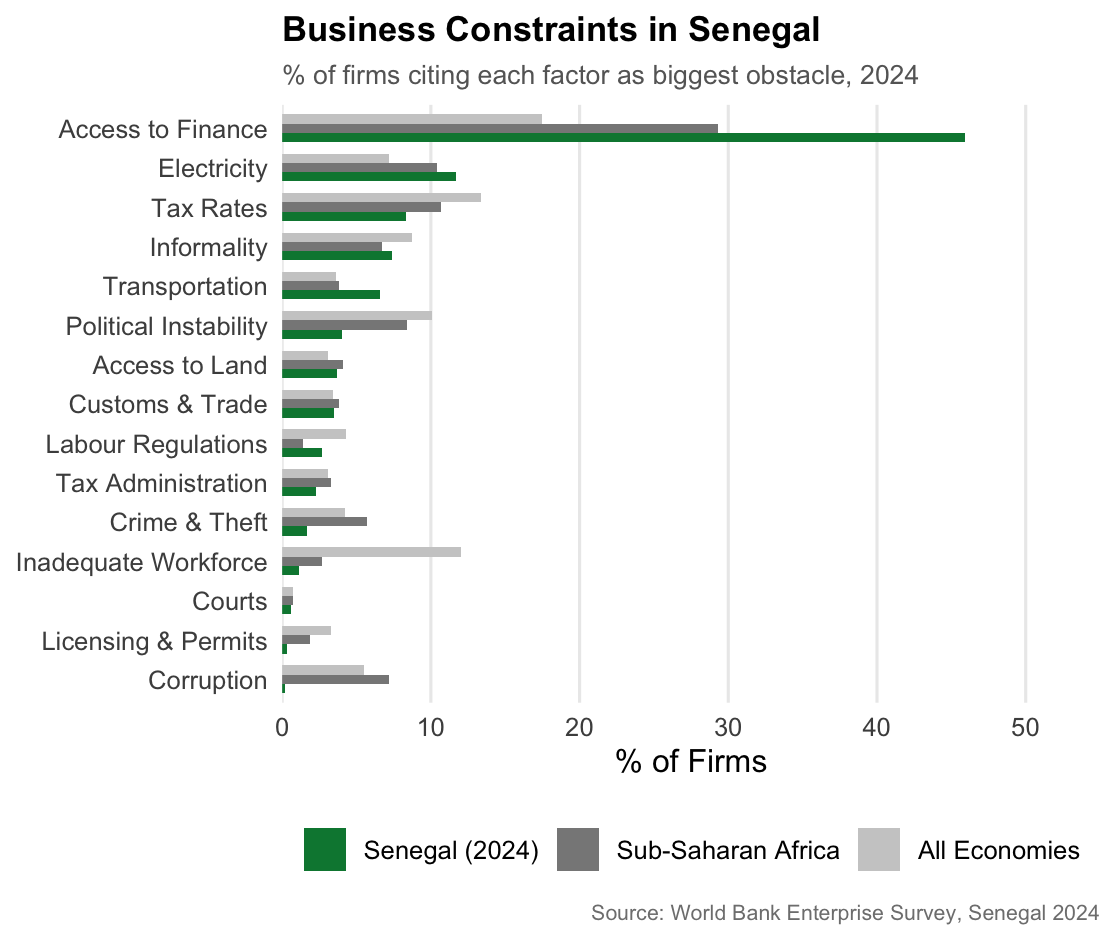
Figure 1
I. The Shadow Price of Human Capital
If human capital is the binding constraint, its shadow price should be high, meaning firms should feel the scarcity acutely, and skilled workers should command steep premiums.
The enterprise survey evidence goes radically against this assumption. Only 1.1% of Senegalese firms identify an inadequately educated workforce as their biggest obstacle, ranking it 12th out of 15 constraints (Figure 1). This sits far below the Sub-Saharan Africa average of 2.7% and the global average of 12%. Access to finance dominates at 45.9%, followed by electricity (11.7%) and tax rates (8.3%). Firms are not claiming skill scarcity as a major obstacle to their growth.
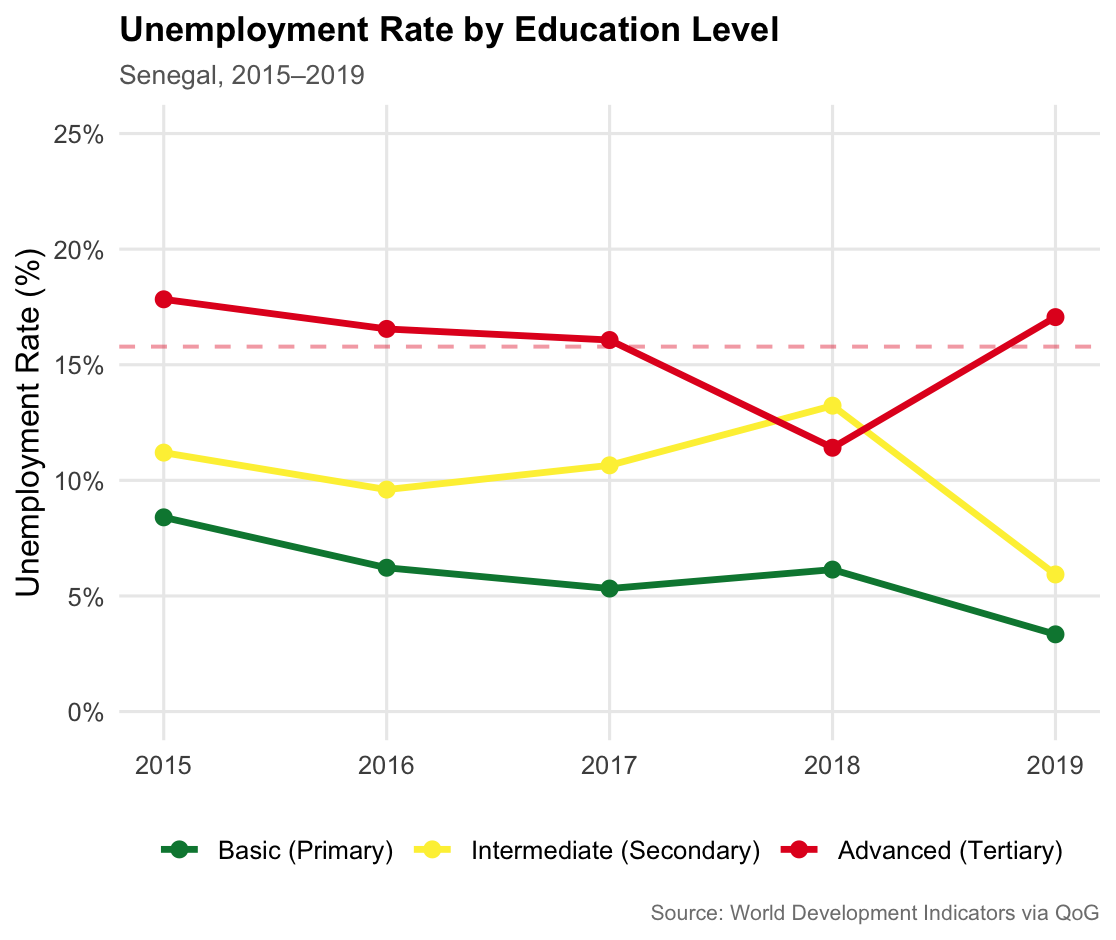
Figure 2
The labour market evidence is equally telling. If human capital were binding, tertiary graduates should face low unemployment as firms compete to hire them. Senegal shows the opposite (Figure 2). Tertiary-educated workers face the highest unemployment of any group, averaging 16% over 2015–2019, while workers with only primary education face 3–8%. This inverted unemployment gradient shows that the economy is not generating sufficient demand for skilled labour. Graduates are produced faster than the productive structure can absorb them. This points to the fact that the problem is on the demand side, not in a shortage of educated workers (World Bank, 2024; Girsberger et al., 2022).
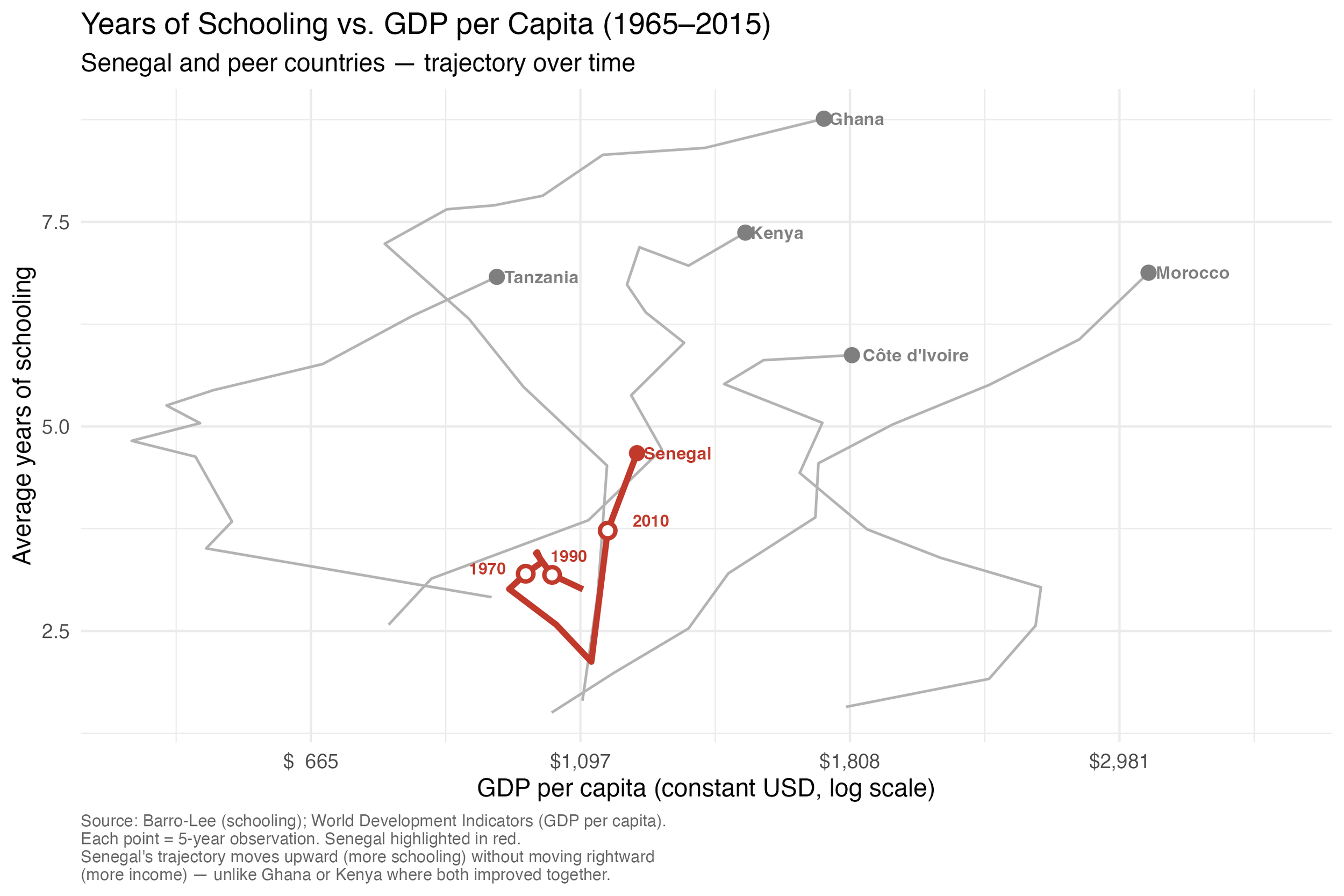
Figure 3
IIA. movements-IN-MOVEMENTS Test: Does More Schooling Produce More Income?
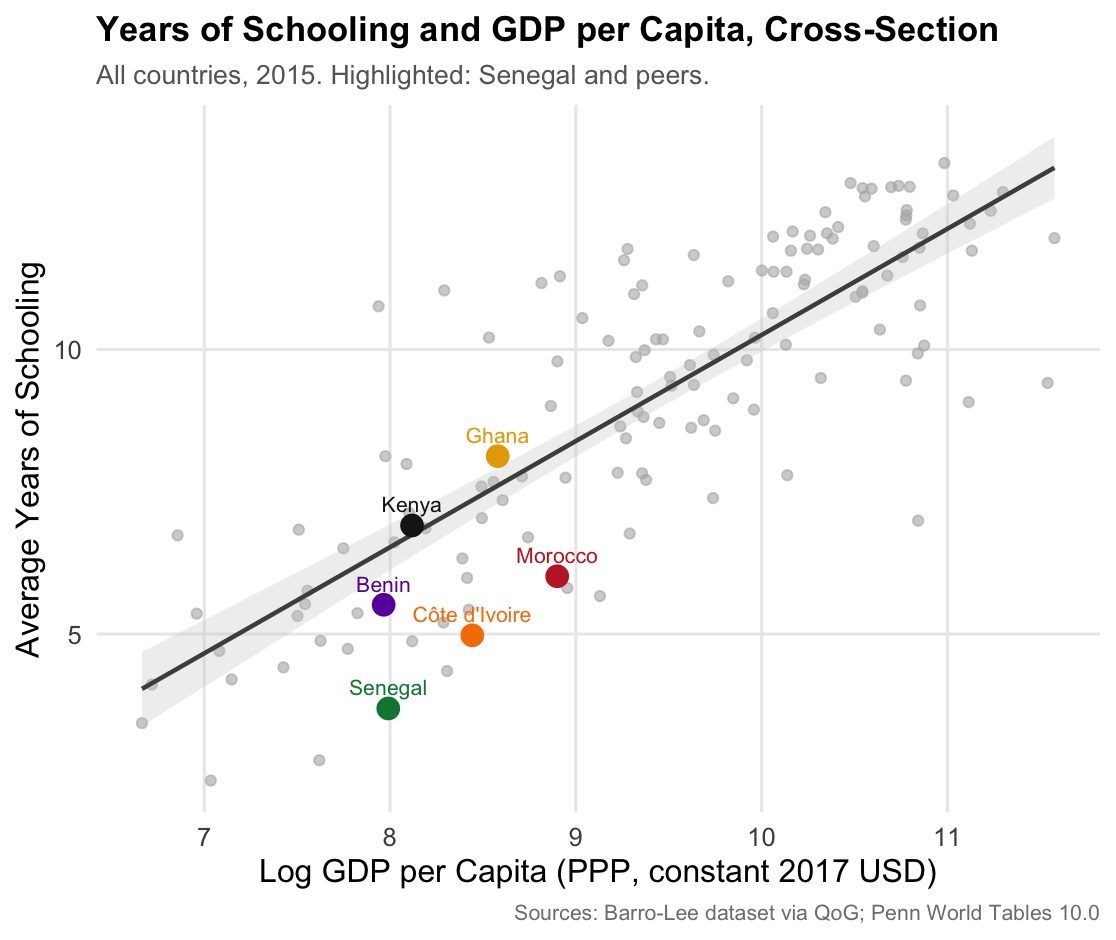
Figure 4
Senegal's educational attainment is low by regional standards. By 2015, the country had reached only 3.7 average years of schooling. This is well below Ghana (8.1), Kenya (6.9), Morocco (6.0), and even Benin and Côte d'Ivoire. Figure 3 plots this trajectory over time against peers. Figure 4 confirms the underperformance in cross-sectional analysis. At Senegal's income level, the global trend predicts 5.5–6 years of schooling, but Senegal reaches only 3.7 years.
The quality picture is similarly unfavourable. Senegal recorded the lowest PWT Human Capital Index of all six peer countries throughout 1970–2019, with the gap widening over time (Figure 5). The World Bank's Human Capital Index places Senegal 121st out of 157 countries, with children completing 7.2 expected years of schooling but only 4.8 quality-adjusted years, a 33% loss to learning quality. The 2019 PASEC assessment found that 25% of primary students lack minimum reading proficiency and 35% fail in mathematics (CONFEMEN, 2020; World Bank, 2020).
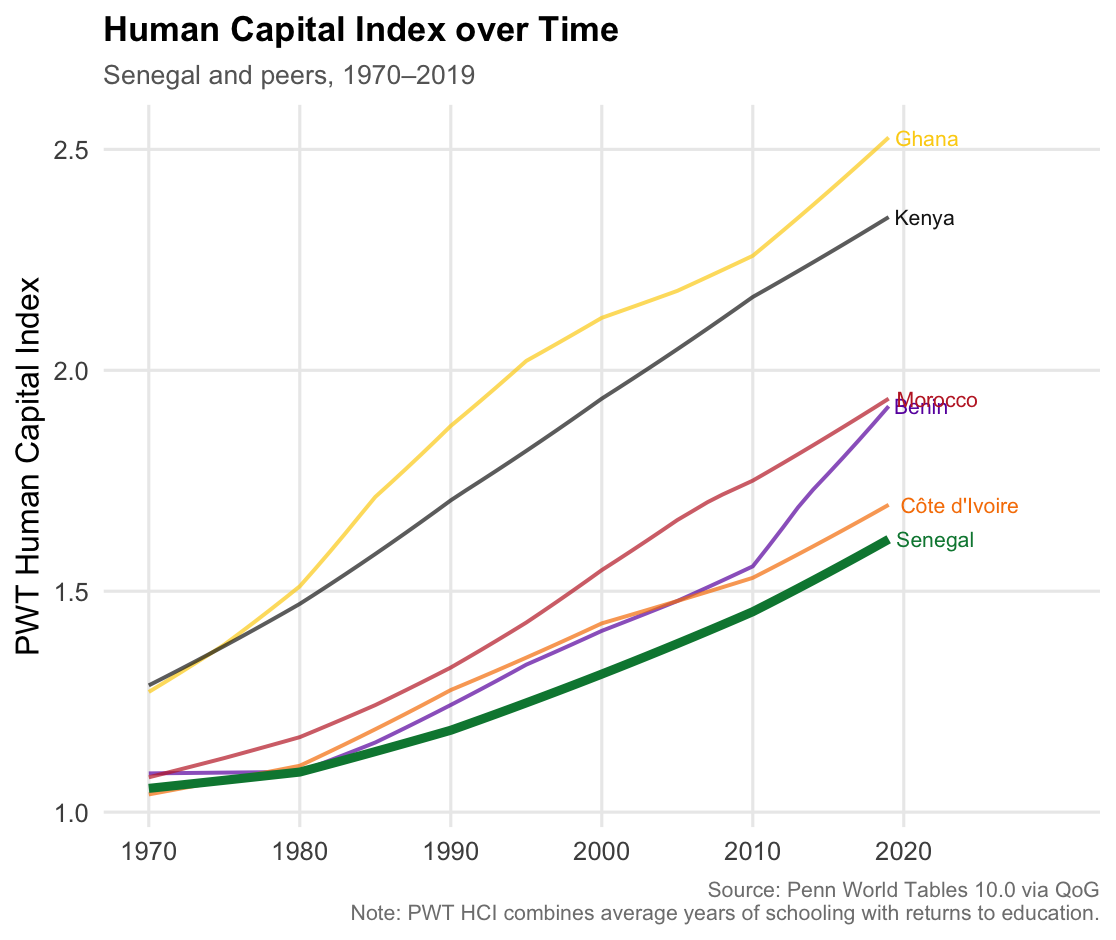
Figure 5
So deficits in both quantity and quality are real. The diagnostic question is whether this underdevelopment is causing the growth constraint, or whether it is itself a symptom of a deeper demand-side problem.
This is where the co-movements test becomes a useful tool for us. Figure 3 tracks each country's trajectory through the schooling-income space over time. In Ghana and Kenya, improvements in schooling accompany rising per capita incomes, the curve moves both upward and rightward. Senegal's trajectory is different. Between 1970 and 2015, schooling rose from approximately 2.5 to 5 years, but income barely moved. The curve moves upward without moving right. If skills were the bottleneck, relaxing them should produce visible income gains. They did not, pointing instead to a structural demand problem in which the productive base lacks the capacity to convert educated workers into economic output.
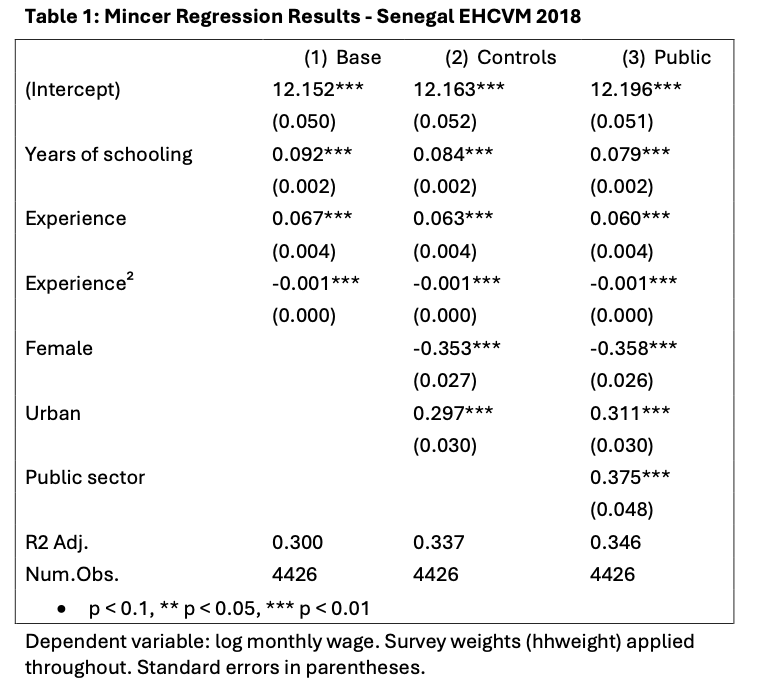
Table 1
IIB. The Mincer Regression: Is it ‘WOrth it’ to get Educated?
Table 1 presents weighted Mincer regression results using EHCVM 2018–2019 microdata, with survey weights applied throughout. The return to an additional year of schooling is 8.4% controlling for experience, gender, and urban location — statistically significant, but below the Sub-Saharan African average of 12.3% and well below country-level estimates of 8–20% across the region (Psacharopoulos & Patrinos, 2018). The market is not placing a high premium on schooling, which is inconsistent with human capital as the binding constraint.
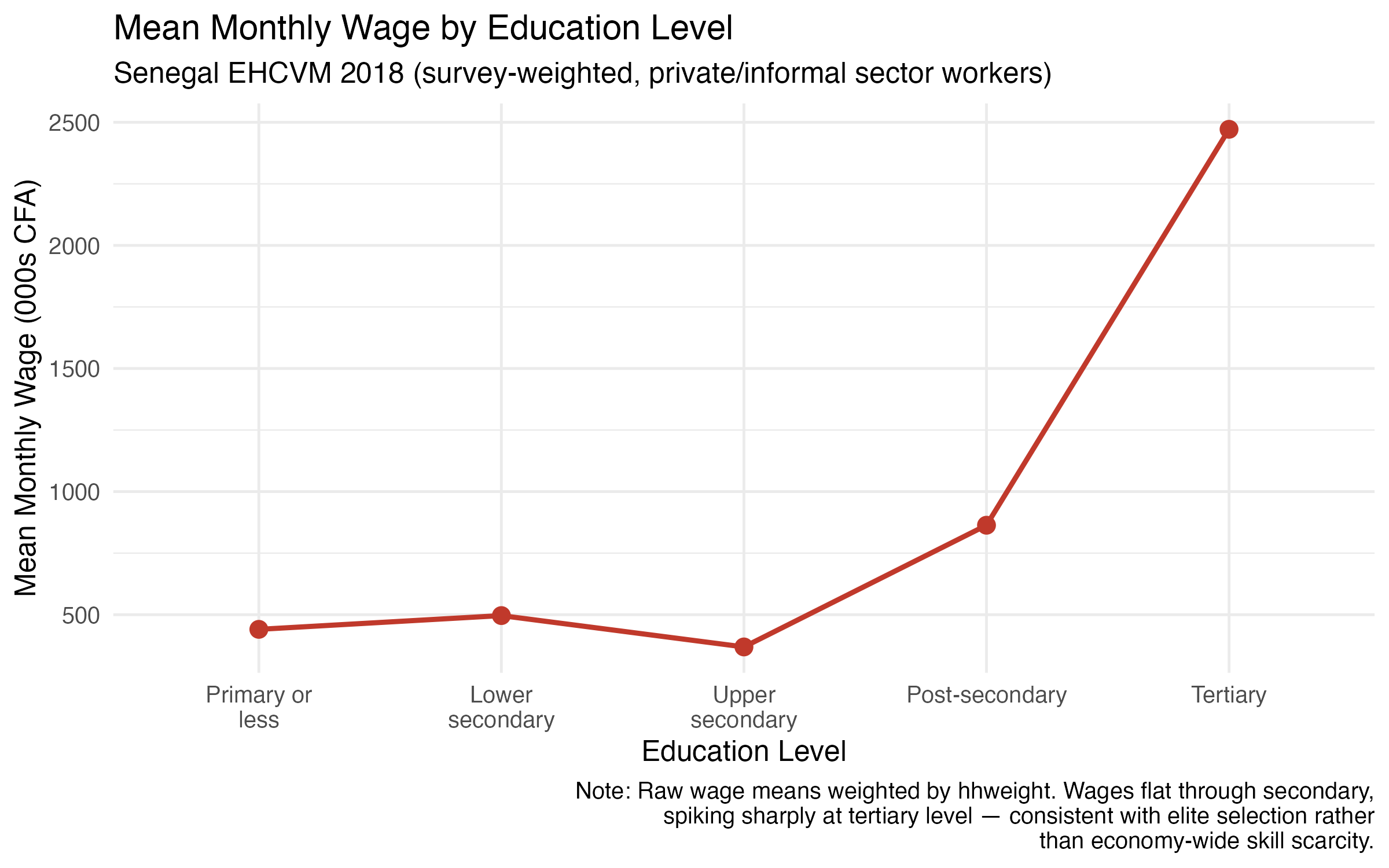
Figure 6
Figure 6 shows a notable wage spike at the tertiary level — wages roughly double between secondary and tertiary education. Does this contradict the argument? I don't think it does, for two reasons.
First, access to tertiary education in Senegal is severely restricted, so the premium likely reflects elite selection rather than economy-wide skill scarcity. Second, and this is the more important point, column (3) of Table 1 shows a public sector wage premium of 37.5%, significant at the 1% level. As Girsberger et al. (2022) show, graduates in Senegal disproportionately queue for rationed public sector jobs rather than being absorbed by private firms. A small privileged group earns well upon securing public employment; the majority of tertiary-educated workers face 16% unemployment. The wage spike reflects public sector rationing, not economy-wide skill scarcity.
III. The ‘Camels-and-Hippos’ Test: Which Sectors Are Growing?
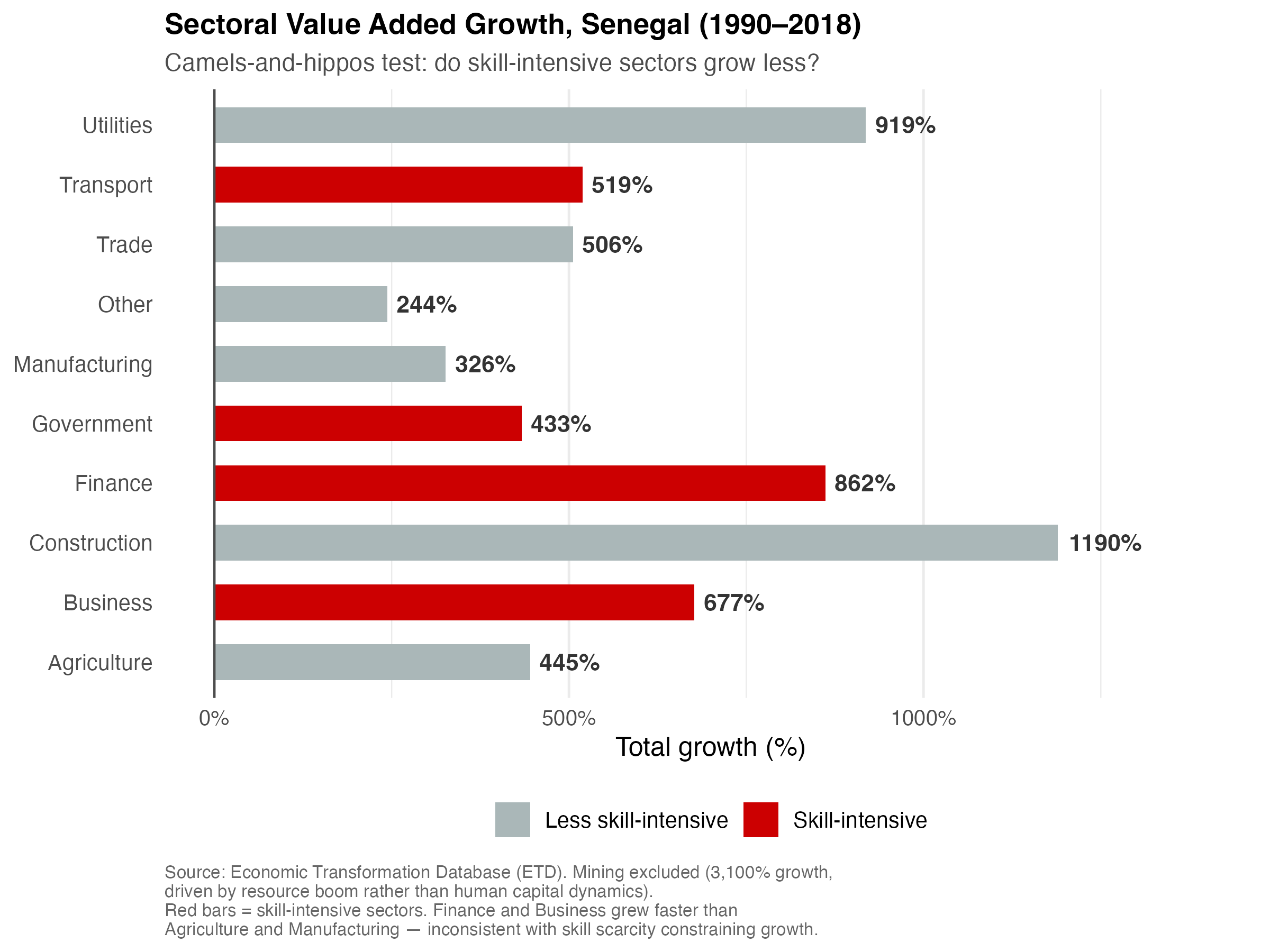
Figure 7
The camels-and-hippos test asks a simple question: if human capital is scarce, are skill-intensive sectors being suppressed? If firms in education-dependent industries can't find the workers they need, those sectors should grow more slowly than low-skill alternatives.
Figure 7 plots sectoral value added growth across Senegal's economy between 1990 and 2018. Finance grew approximately 800% and Business Services approximately 650%, both faster than Agriculture (400%) and Manufacturing (300%). Skill-intensive sectors were not suppressed. The pattern is inconsistent with a binding human capital constraint.
One methodological note: mining is excluded from Figure 7. Its growth of approximately 3,100% over the period reflects a resource boom entirely unrelated to human capital dynamics. Including it would dominate the axis and obscure the skill-intensity comparison the test requires.
With 56% of employment in (mostly informal) services, the highest among all peers, Senegal has undergone structural transformation out of agriculture without a corresponding expansion of industry (22% industrial share, among the lowest in the peer group). Workers are flowing into services not because skills are abundant, but because the economy lacks the productive structure to absorb them elsewhere (McMillan et al., 2014).
IV. Agents Overcoming the Constraint
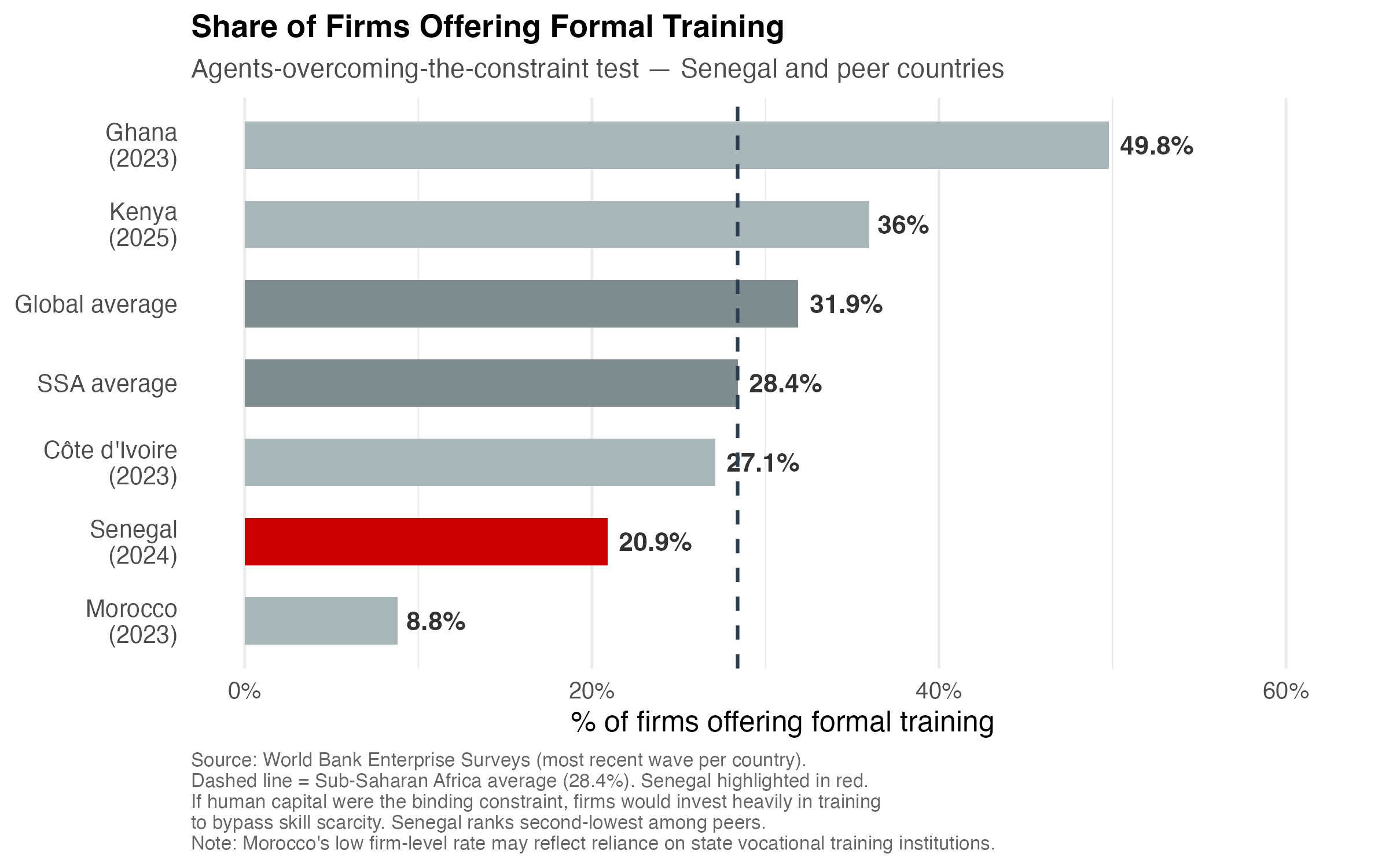
Figure 8
Our final test asks: if human capital is binding, are agents developing costly workarounds to bypass them? Firms would invest heavily in employee training. They would pay premiums for foreign skilled workers. Households would pour money into private schooling.
Figure 8 compares formal training rates across Senegal and its peers. Only 20.9% of Senegalese firms offer formal training, below Côte d'Ivoire (27.1%), the SSA average (28.4%), the global average (31.9%), Kenya (36.0%), and Ghana (49.8%). Senegal ranks second-lowest in the peer group. Firms are not behaving as though skills are scarce (World Bank, 2024).
Morocco is the one apparent outlier at 8.8%. For context, Morocco's well-developed state vocational training system means firms outsource skill development to public institutions rather than providing it in-house. This is a distinct institutional arrangement, not evidence of weak skill demand.
Where training does occur in Senegal, it runs predominantly through informal apprenticeships, which account for 50–90% of workforce preparation across the country and its neighbours, concentrated in low-skill craft occupations rather than high-skill bypass activity (Ahadzie, 2009). The absence of bypass strategies across all three channels confirms that agents are not treating human capital as a constraint they need to work around.
Conclusion: Education Matters, But It Is Not the Binding Constraint for Senegal’s Growth Today
Four diagnostic signals all point me in the same direction.
Firms overwhelmingly cite access to finance, electricity, and tax rates over workforce inadequacy. Tertiary graduates face higher unemployment than uneducated workers. The co-movements evidence shows that Senegal's schooling improved substantially between 1970 and 2015 without producing corresponding income gains — a decoupling inconsistent with skills being the bottleneck. Weighted Mincer returns of 8.4%, below the 12.3% SSA average, confirm the market places no exceptional premium on schooling. Skill-intensive sectors grew faster than Agriculture and Manufacturing. And Senegal's firm training rate ranks near the bottom of its peer group.
Senegal's educational deficits are real and serious, but they are not what is holding back economic growth. The more plausible explanation is a structural demand problem. Senegal's dominance of low-productivity informal services suppresses demand for educated workers, which limits returns to education and reinforces the cycle. Improving the education system is crucial (also for other social benefits and stimulation other dimensions of development than economic growth), but without a productive structure capable of absorbing graduates, more schooling will produce more educated unemployment rather than more growth.
This points toward the binding constraints lying elsewhere. In the next post, I'll turn to the full group diagnostic report, examining finance, electricity access, and the other structural conditions that are likely the real bottlenecks in Senegal's development path.
References
Ahadzie, W. (2009). The traditional informal apprenticeship system of West Africa as preparation for work. In R. Maclean & D. Wilson (Eds.), International handbook of education for the changing world of work. Springer. https://doi.org/10.1007/978-1-4020-5281-1_17
Boccanfuso, D., Larouche, A., & Trandafir, M. (2015). Quality of higher education and the labor market in developing countries: Evidence from an education reform in Senegal. World Development, 74, 251–265. https://doi.org/10.1016/j.worlddev.2015.05.009
CONFEMEN. (2020). PASEC2019: Qualité des systèmes éducatifs en Afrique subsaharienne francophone. CONFEMEN.
Girsberger, E. M., Meango, R., & Rapoport, H. (2022). The puzzle of educated unemployment in West Africa (IZA Discussion Paper No. 15721). Institute of Labor Economics. https://docs.iza.org/dp15721.pdf
McMillan, M., Rodrik, D., & Verduzco-Gallo, I. (2014). Globalization, structural change, and productivity growth, with an update on Africa. World Development, 63, 11–32. https://doi.org/10.1016/j.worlddev.2013.10.001
Psacharopoulos, G., & Patrinos, H. A. (2018). Returns to investment in education: A decennial review of the global literature. Education Economics, 26(5), 445–458. https://doi.org/10.1080/09645292.2018.1484426
Santos, M. A., & Hani, F. (2021). Testing for human capital as a binding constraint: Checks, symptoms, and prescriptions. Elements in the Economics of Emerging Markets. Cambridge University Press.
World Bank. (2020). Human Capital Index 2020. World Bank Group. https://www.worldbank.org/en/publication/human-capital
World Bank. (2024). Enterprise Survey: Senegal 2024. World Bank Group. https://www.enterprisesurveys.org
