Growth Diagnostics in Practice, Part 1: Senegal’s Path from Malthus to Premature Deindustrialisation

This post is part of a four-part series documenting my work from Growth Diagnostics in Development: Theory and Practice, a course imported from the Growth Lab at Harvard Kennedy School and taught by Frank Muci Lander at the LSE. The series applies the growth diagnostics framework, developed by Dani Rodrik, Ricardo Hausmann, and Andres Velasco, to assess the binding constraints on economic growth in Senegal. This is the second post, which establishes the country's growth history as the foundation for the diagnostic analysis that follows.
I. History of Population and GDP
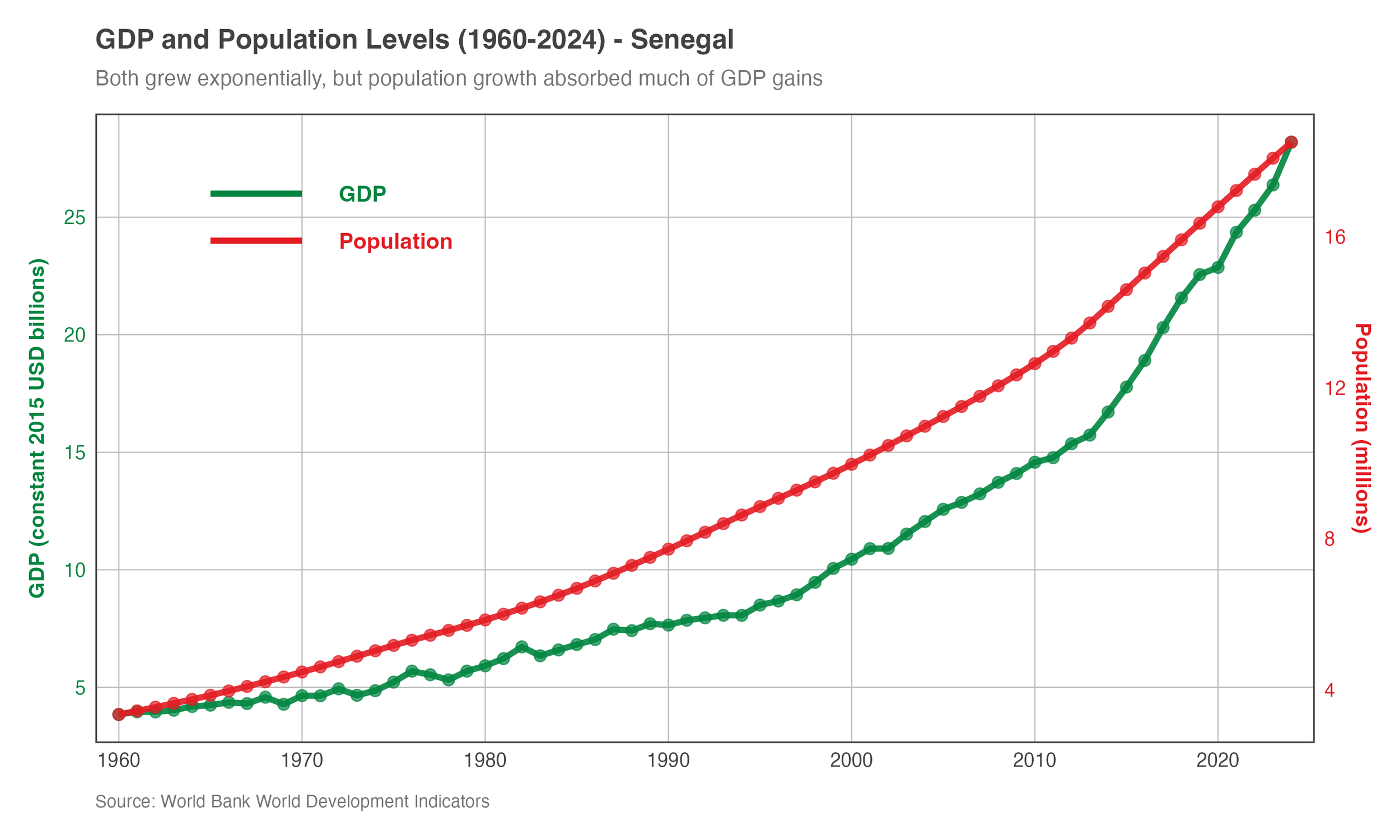
Figure 1
Senegal gained independence from France in 1960 and has since struggled to translate economic expansion into sustained per capita growth. Between 1960 and 2024, both GDP and population grew exponentially, with population growth systematically absorbing economic gains and suppressing per-capita income improvements for over three decades (figure 1).
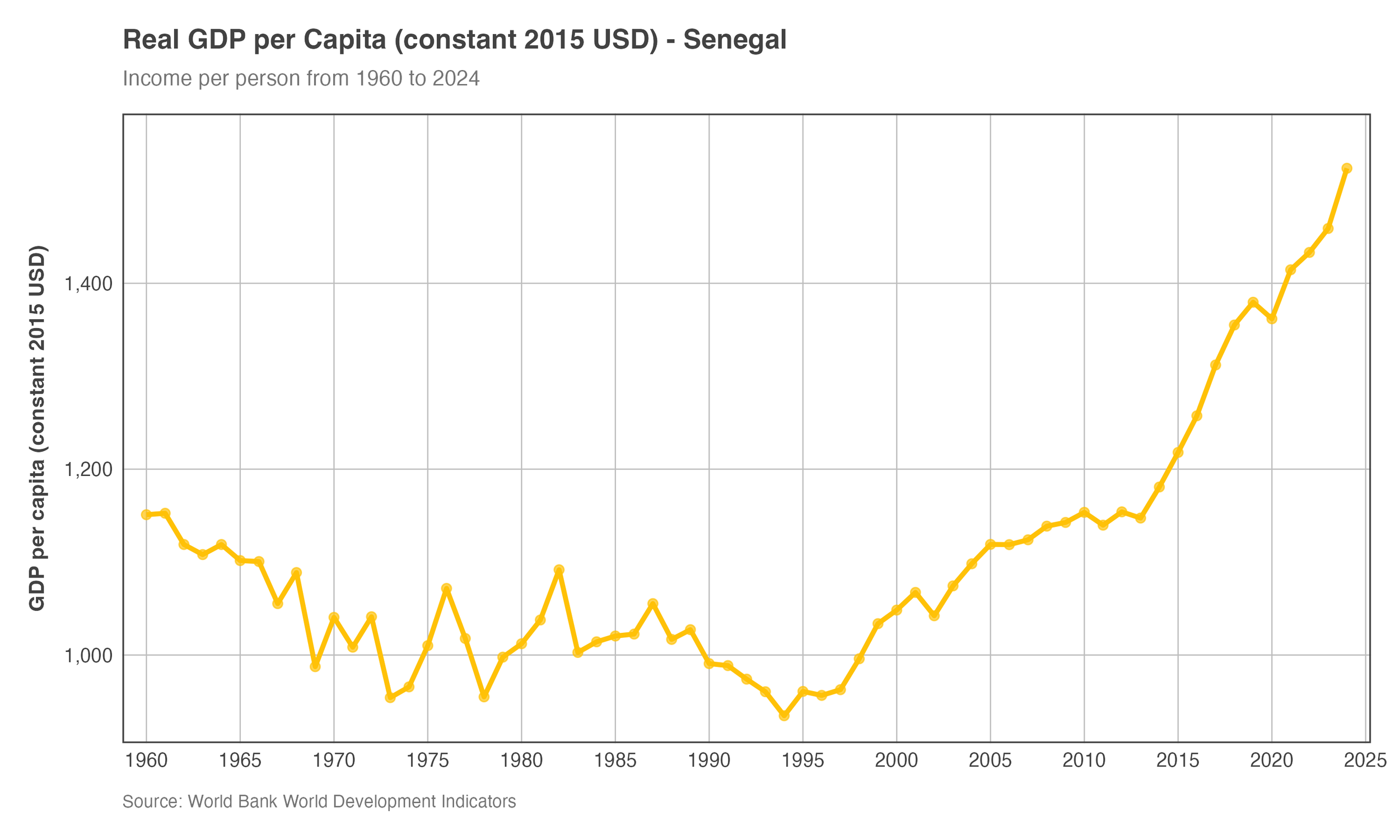
Figure 2
Senegal’s real GDP per capita stagnated until the mid-1990s (figure 2). Trapped in Malthusian dynamics where productivity gains were consumed by demographic expansion, per capita income declined from approximately $1,150 in 1980 to below $950 in 1990.
In 1995, GDP sustained upward movement began and roughly in 2010s Senegal’s economy is entering the modern growth (with more sustained positive growth rate) phase and income per capita reaches approximately $1,500 by 2024.
Nevertheless, structural break analysis reveals no statistically significant breaks across 1960-2023, despite regime shifts in 1996 and 2011 driven by democratic consolidation and natural resource discoveries.[1] Growth volatility remained pronounced, especially pre-1990, with annual fluctuations swinging from -10% to +6% without achieving the stable 3% annual GDP per capita growth needed for OECD convergence (figure 3).[2]
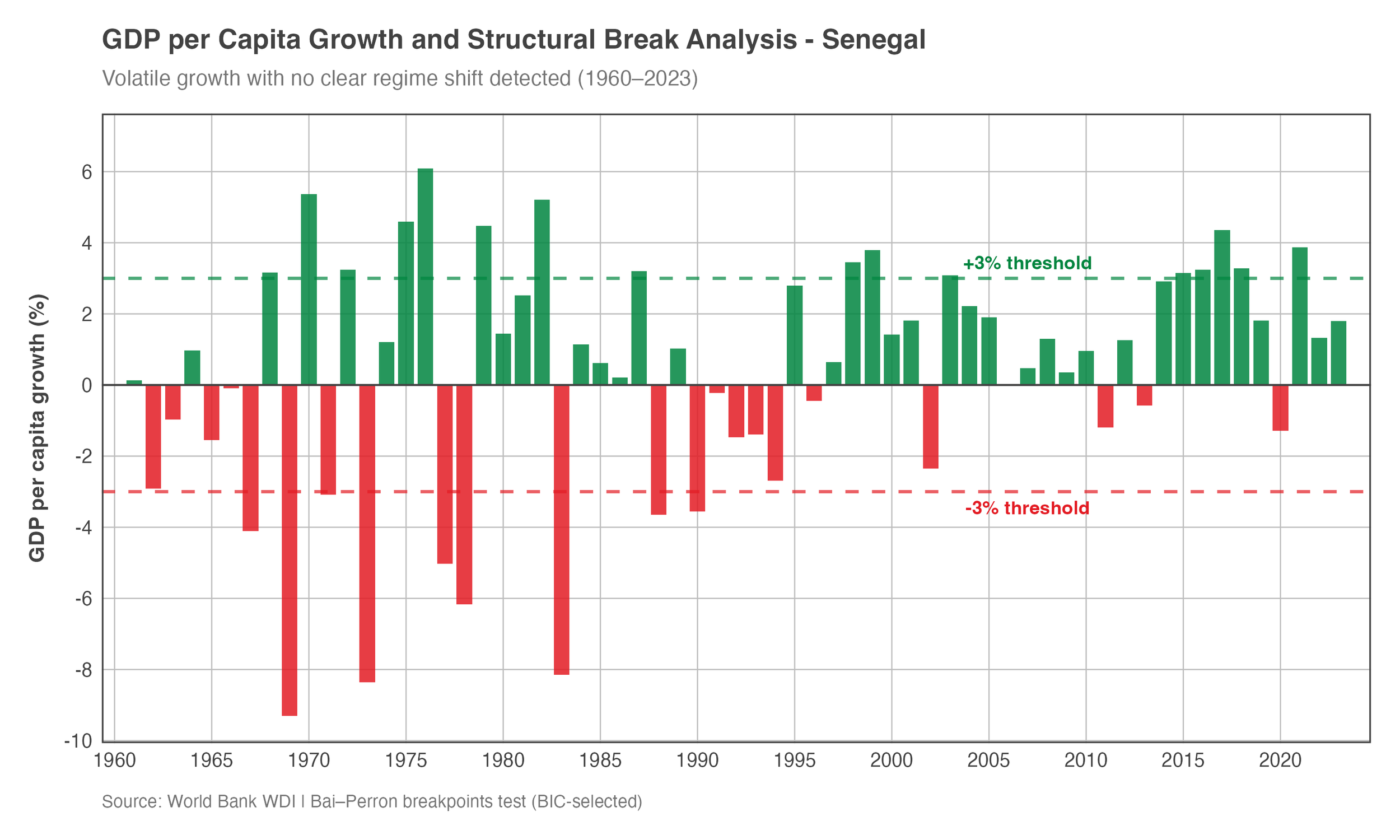
Figure 3
Examining growth dynamics by decade reveals when Senegal escaped the Malthusian trap. During the 1960s, population growth (2.9%) dramatically exceeded GDP growth (1.2%), driving per capita income downward. This pattern persisted through the 1970s-1990s, with GDP growth barely outpacing population expansion. Only in the 2010s did the gap widen significantly, with GDP growth reaching 4.8% while population growth moderated to 2.8%, finally generating substantial per capita gains. The 2020s maintained this positive differential (4.0% GDP growth versus 2.5% population growth), suggesting Senegal may have permanently escaped the trap that constrained development for so long.
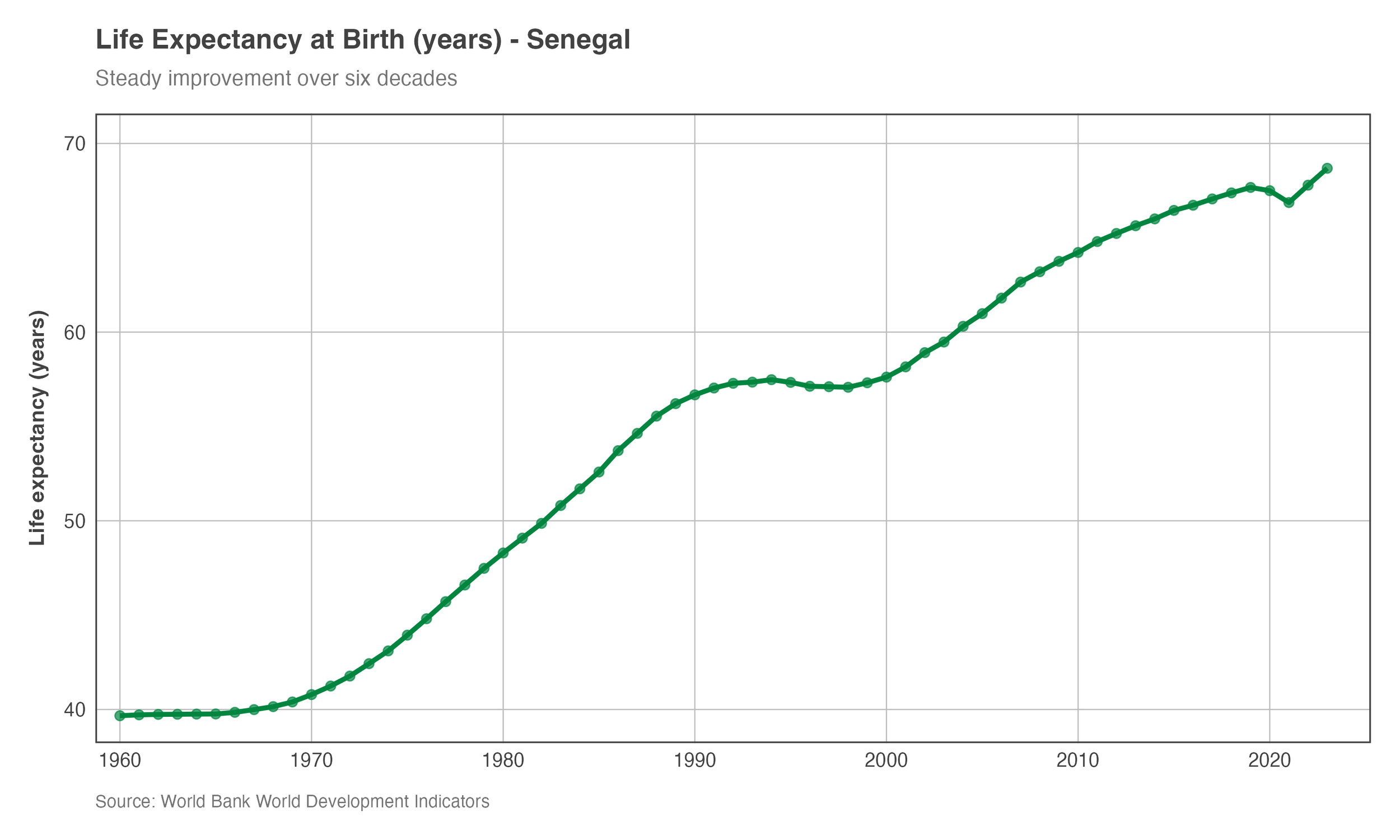
Figure 4
Life expectancy provides the period’s unambiguous success story, rising steadily from 40 years in 1960 to 69 years by 2024 without major disruptions (figure 4). Unlike countries devastated by conflict or HIV/AIDS epidemics, Senegal’s mortality improvements reflect consistent investments in public health infrastructure.[3] However, this demographic transition followed a problematic sequence that amplified population pressures.
II. Demographic Transition
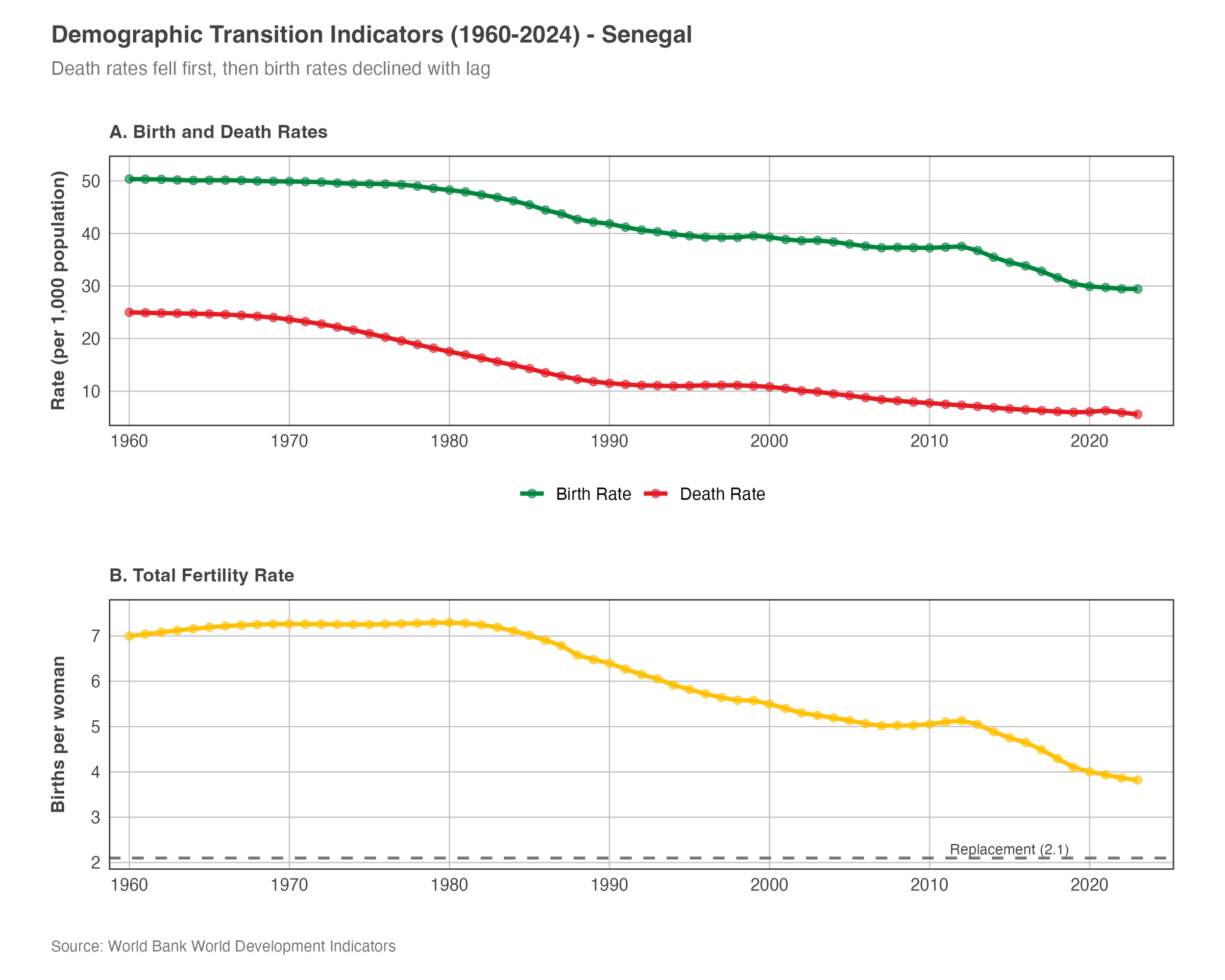
Figure 5
Senegal experienced a delayed and disjointed demographic transition that created a prolonged dependency burden, fundamentally constraining economic development. The standard demographic transition model suggests mortality declines should eventually trigger fertility declines, opening a “window of opportunity” when the working-age population grows faster than dependents.[4] Senegal’s transition, however, happens with a lag where death rates fell sharply from 25 per 1,000 in 1960 to approximately 6 per 1,000 by 2024, but birth rates remained stubbornly elevated above 50 per 1,000 until 1980 before gradually declining to 29 per 1,000. Similarly, total fertility remained above 7 children per woman until the 1980s and stands at approximately 4 children per woman in 2024 - still well above the replacement level of 2.1(figure 5).
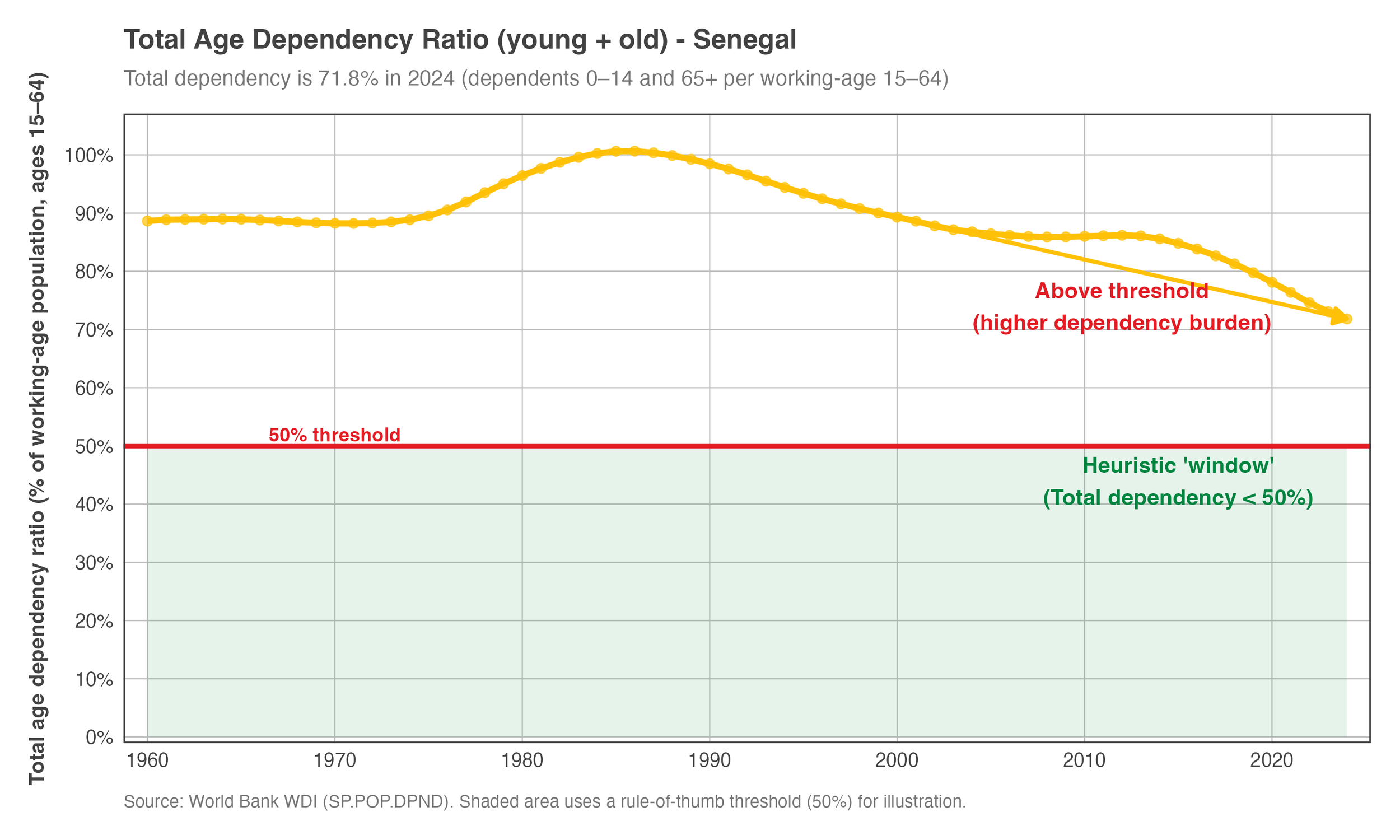
Figure 6
This lag caused a major challenge for development. The age-dependency-ratio (dependents = children under 15 and elderly over 65) relative to the working-age population, peaked above 101% around 1985, meaning there were more dependents than working-age individuals. This ratio has declined consistently since then, reaching 71.8% by 2024, signaling a potential ‘window of opportunity’ is opening now (figure 6). Nevertheless, the dependency ratio remains substantially above the 50% threshold needed to trigger major improvements in growth conditions (e.g., Ghana’s demographic dividend began once its ratio fell below 60%).[5]
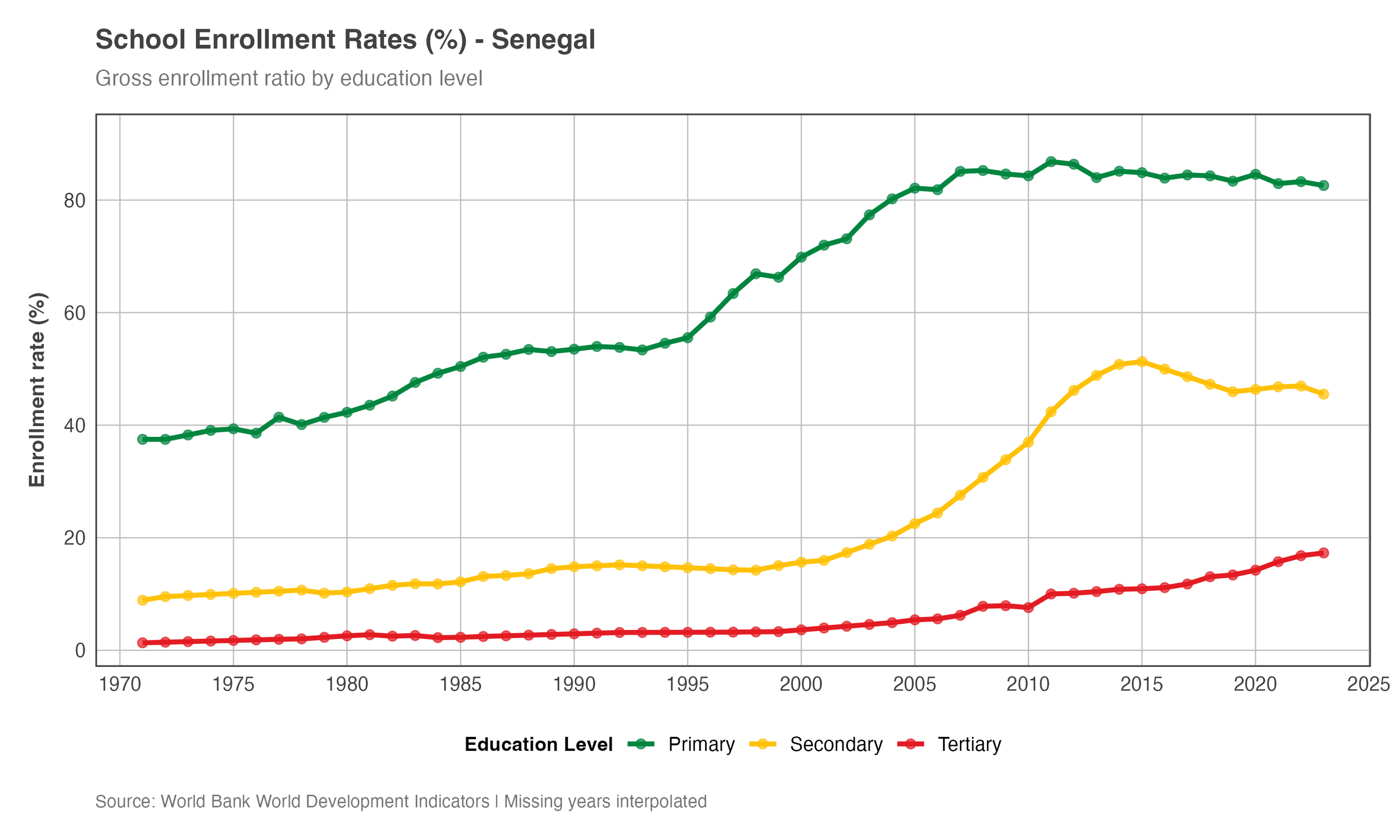
Figure 7
The human capital picture presents both progress and significant gaps. Primary school enrollment expanded dramatically, reaching approximately 83% by the 2010s before plateauing. Secondary enrollment accelerated after 2000, rising from 15% to 46%, though recent stagnation raises concerns about sustained momentum. Most critically, tertiary enrollment remains severely constrained at just 17% by 2024 being far below levels needed to support a knowledge economy or high-productivity service sectors (figure 7). This tertiary education gap likely constrains Senegal’s capacity to deploy its growing labor force in productive activities, limiting technological adoption and innovation, a constraint I will explore further in the next part of this series.[6]
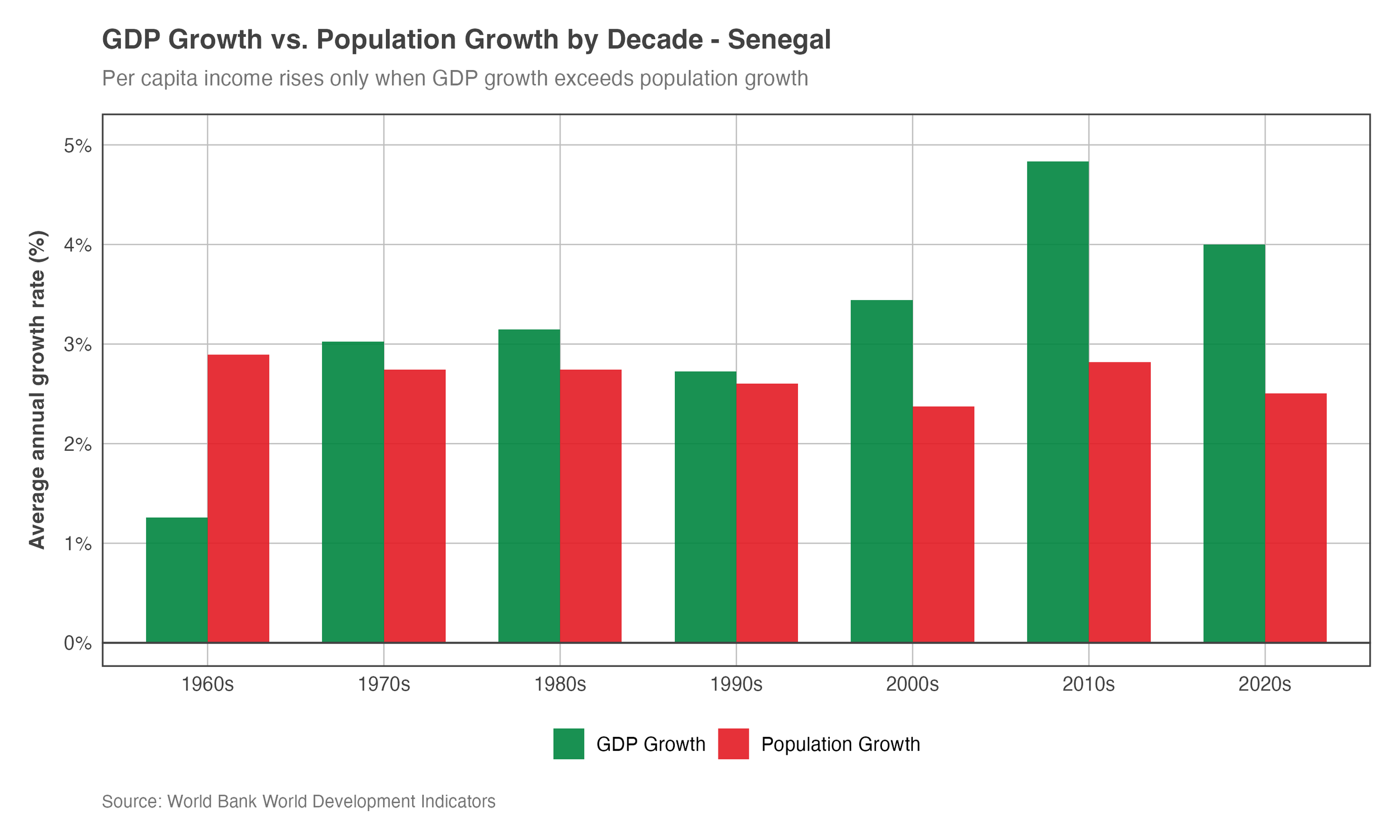
Figure 8
Figure 8 shows that until the 2000s, GDP growth only marginally exceeded population growth, yielding negligible per capita income gains. Sustained improvements emerged only in the 2010s, when the growth differential widened (figure 8). However, this raises the question: if Senegal’s dependency ratio remains above 70% and the demographic dividend has not fully materialized, what explains the post-2012 acceleration in per capita GDP?
III. History of Structural Transformation
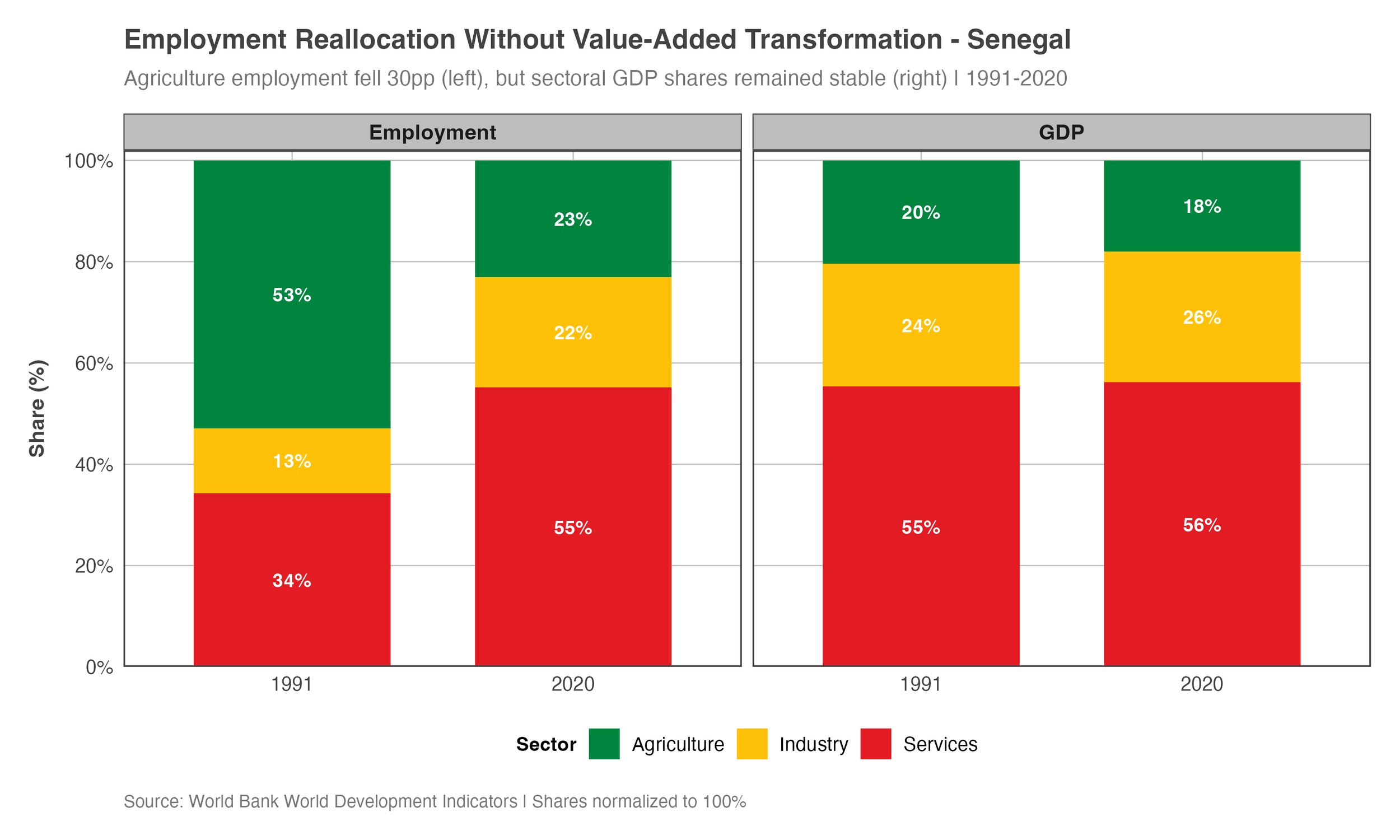
Figure 9
Senegal’s structural transformation is a case of "employment reallocation without productivity transformation". Between 1991 and 2020, agricultural employment dramatically decreased from 53% to 23% of the workforce. Services absorbed most of these departing agricultural workers, expanding from 34% to 55% of employment. However, sectoral GDP shares remainedalmost unchanged with services increasing just 1 percentage point (55% to 56%), and agriculture declined only 2 percentage points (20% to 18%) (figure 9).
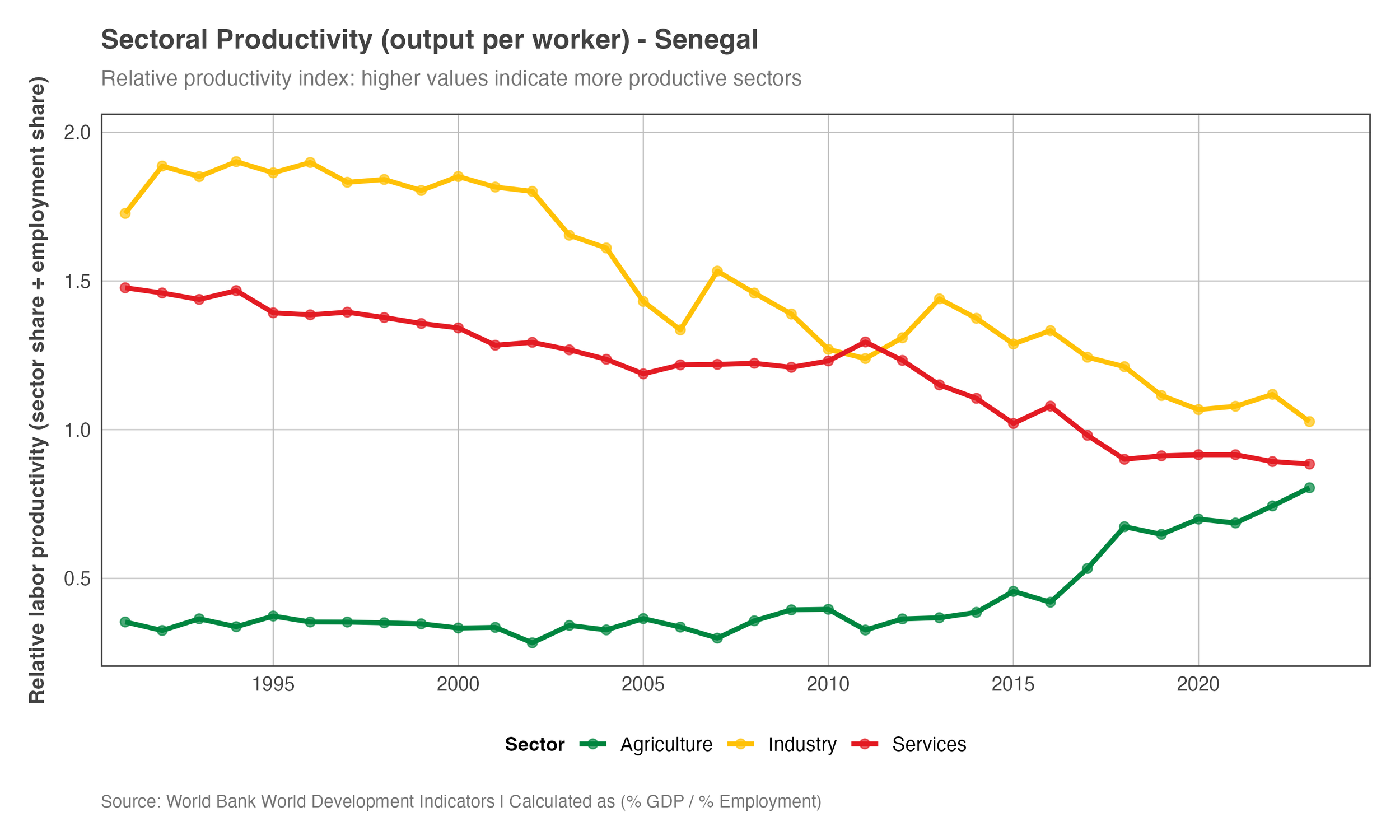
Figure 10
This disconnect shows that structural change occurred in employment composition but not in economic structure. Sectoral productivity converged through leveling down (1991-2024). Industry’s advantage collapsed from 1.85x to 1.02x average productivity, services fell from 1.48x to below-average at 0.87x, and agriculture, despite doubling from 0.34x to 0.77x, remains least productive (figure 10).
Taken together, workers left low-productivity agriculture not for high-productivity manufacturing or modern services, but predominantly for low-productivity informal services that generate minimal value-added per worker.[7] This “premature tertiarization” bypasses the manufacturing-led pathway that characterized successful Asian economies, channeling labor into low-productivity activities without technological learning opportunities.[8]
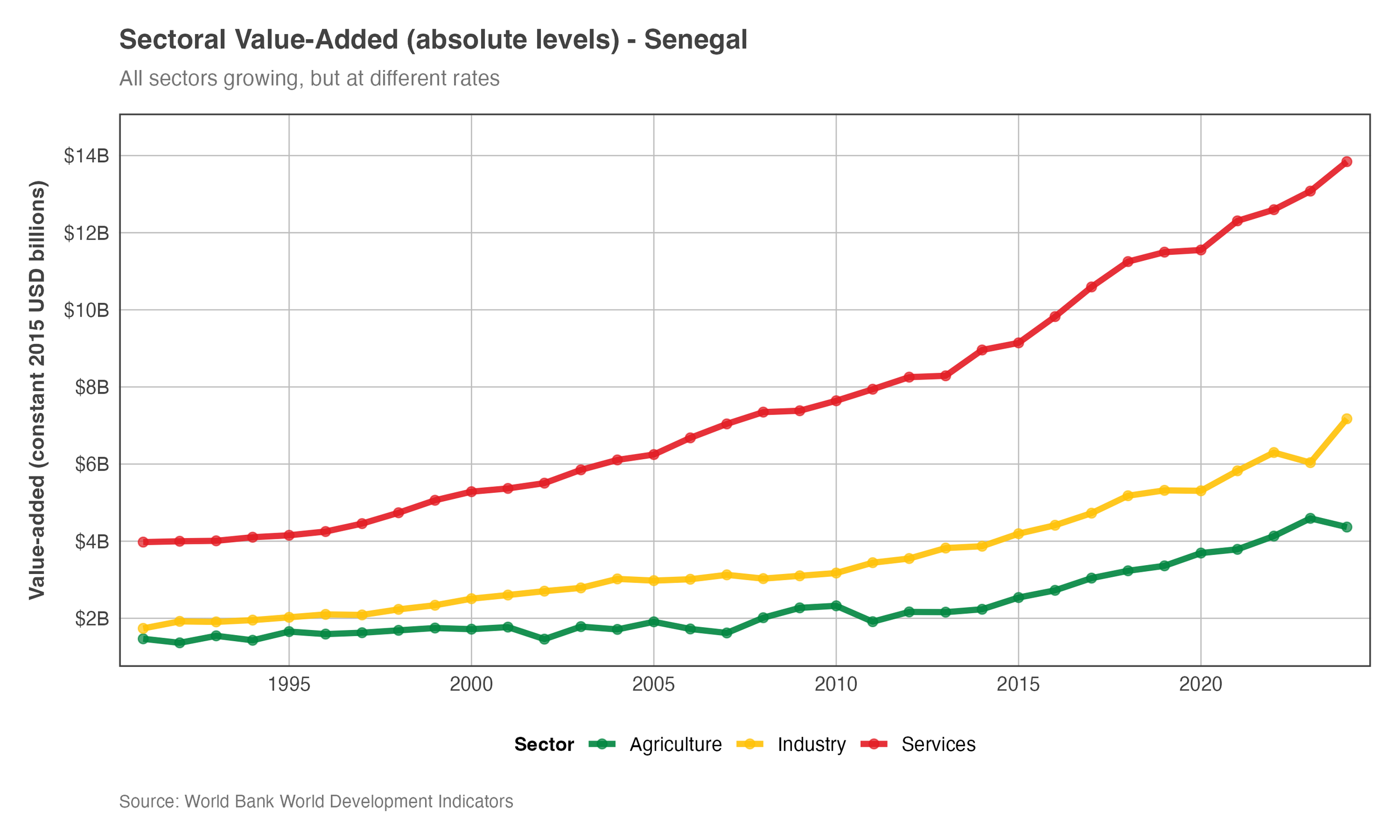
Figure 11
All sectors grew in absolute terms: services from $4B to $14B, industry from $2B to $7B, and agriculture from $1.5B to $4.5B. However, this growth reflects population expansion rather than productivity improvements. Sectoral productivity converged toward mediocrity, explaining why structural employment shifts failed to boost per capita incomes or trigger growth regime changes (figure 11).
IV. Structural Transformation Comparison
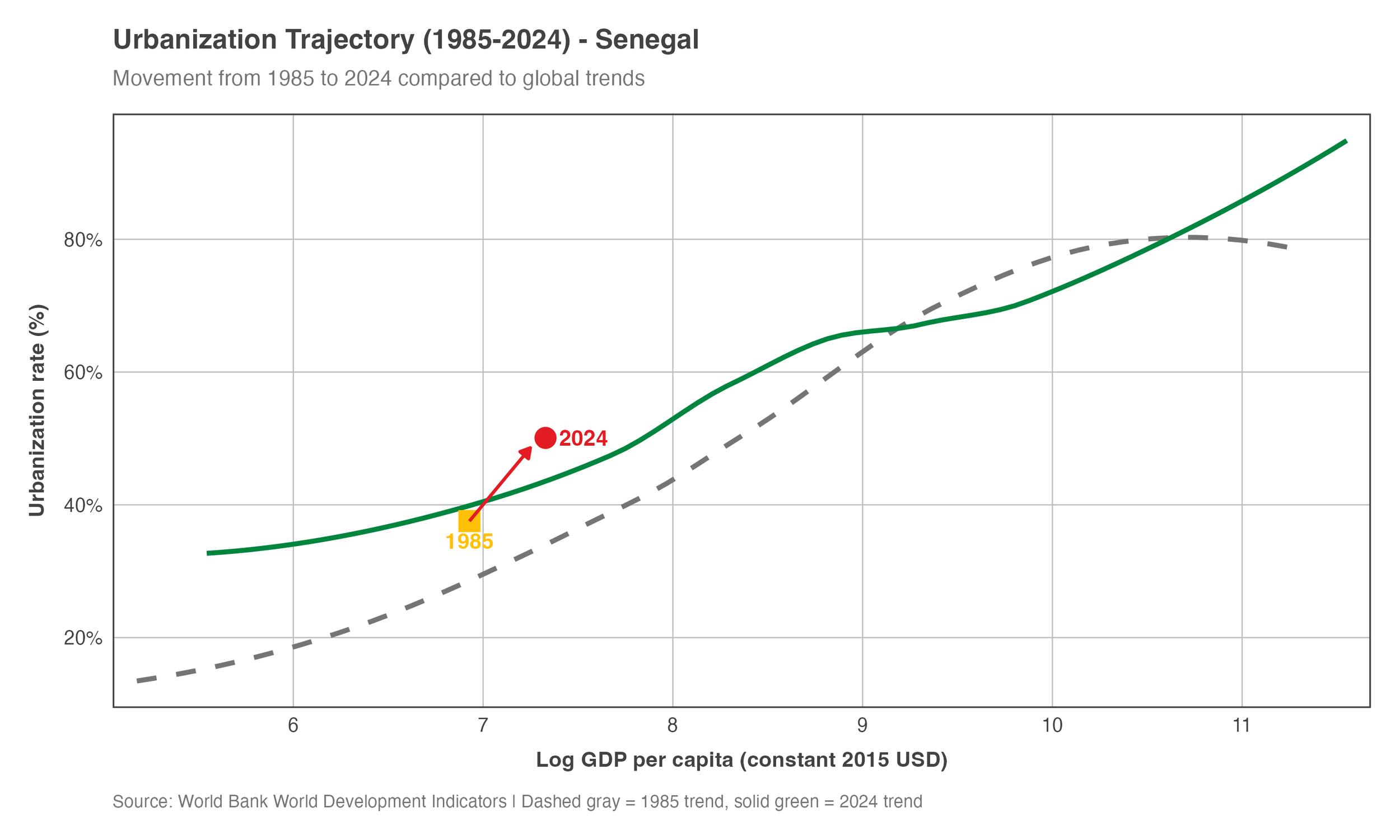
Figure 12
Senegal’s urbanization trajectory reinforces the productivity “puzzle” revealed in sectoral analysis. The country urbanized from approximately 37% in 1985 to 50% by 2024, outpacing the global income-urbanization relationship (figure 12).
Cross-country comparison reveals Senegal is 4.5 percentage points above expected urbanization for its income level: at $1,500 GDP per capita, the model predicts 45%, yet Senegal achieved 50% (figure 13). Since 1985, Senegal’s urbanization has exceeded the global trend, indicating rapid urban concentration.
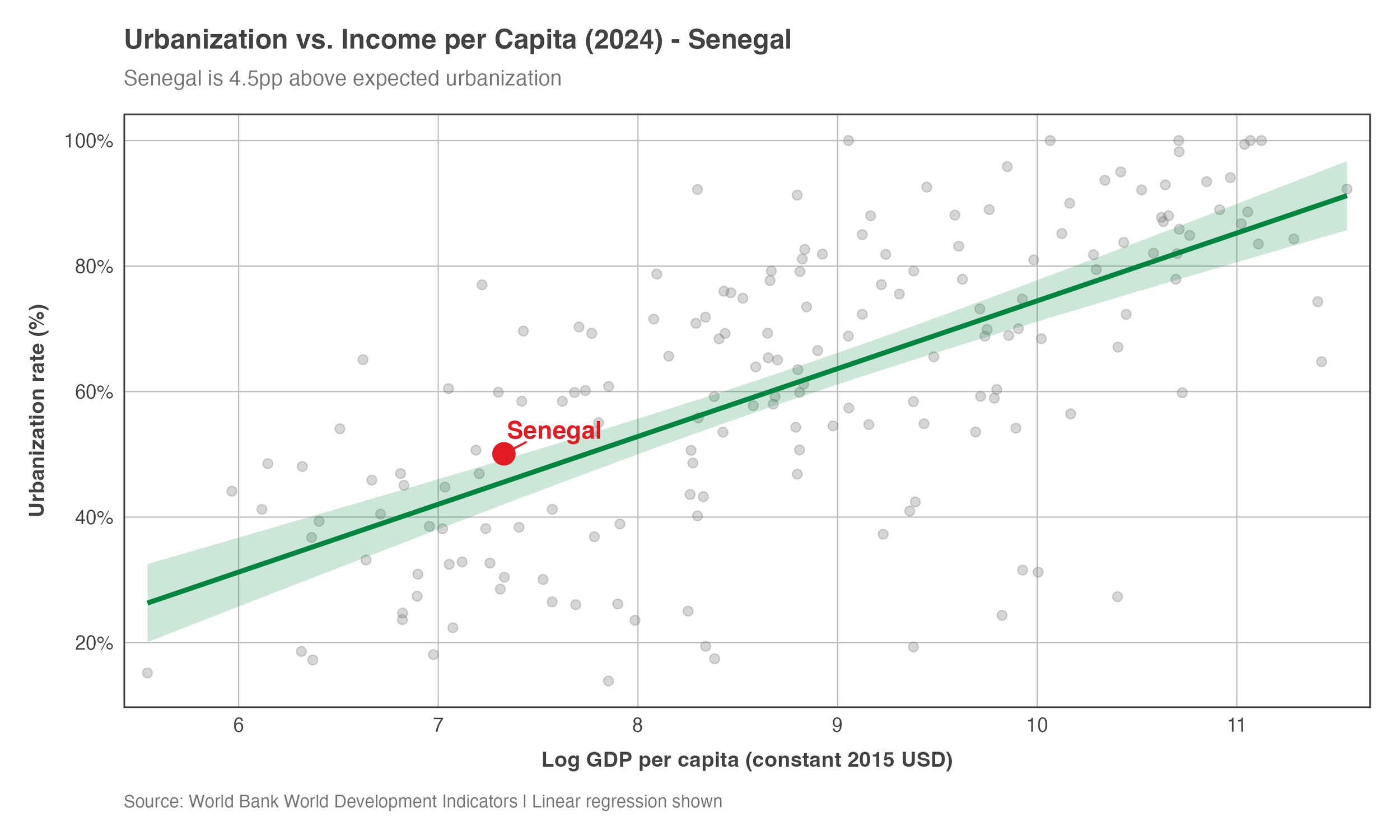
Figure 13
This “excess” urbanization without corresponding income gains suggests cities are not generating the agglomeration economies that typically drive urban productivity premiums.[9] Instead, Senegal’s cities appear to absorb rural-urban migrants into informal settlements and low-productivity service activities that replicate, rather than transform, rural poverty.[10]
V. Conclusion

Figure 14
Despite beginning from a relatively favorable position in the 1960s, Senegal has lagged behind its peers (figure 14). Structural transformation has occurred (workers moving away from agriculture, urbanization, sectoral shift) but productivity gains have remained weak, suggesting transformation without value creation. After escaping the Malthusian trap in the 1990s and entering the early stages of modern growth in the 2010s, the demographic window has only just begun to open. While fertility has fallen and the dependency burden is gradually easing, human capital formation lags behind with secondary enrollment declining and tertiary enrollment remaining at 17%. The main growth question, therefore, is whether Senegal can convert its urban and demographic momentum into sustained productivity and technological upgrading.
References:
[1] J. Vernon Henderson, “Urbanization and Growth,” in Handbook of Regional and Urban Economics, vol. 5, ed. Gilles Duranton, J. Vernon Henderson, and William C. Strange (Amsterdam: Elsevier, 2015), 1543–1591; J. Vernon Henderson and Matthew A. Turner, “Urbanization in the Developing World: Too Early or Too Slow?” Journal of Economic Perspectives 34, no. 3 (2020): 150–173.
[2] Margaret McMillan and Dani Rodrik, “Globalization, Structural Change, and Productivity Growth,” NBER Working Paper No. 17143 (2011)
[3] Dani Rodrik, “Premature Deindustrialization,” Journal of Economic Growth 21, no. 1 (2016): 1–33.
[4] Dani, Rodrik “Unconditional Convergence in Manufacturing.” Quarterly Journal of Economics 128, no. 1 (2013): 165–204.
[5] Oded Galor,Unified Growth Theory (Princeton, NJ: Princeton University Press, 2011).
[6] Eugenia Amporfu, Daniel Sakyi, Prince Boakye Frimpong, and Olanrewaju Olaniyan, “Demographic Dividend of Ghana: The National Transfer Approach,” African Review of Economics and Finance 2 (2022): 1–18.
[7] Charles I. Jones and Paul M. Romer, “The New Kaldor Facts: Ideas, Institutions, Population, and Human Capital,” American Economic Journal: Macroeconomics 2, no. 1 (2010): 224–245
[8] International Monetary Fund, Senegal: Staff Report for the 2016 Article IV Consultation and Third Review Under the Policy Support Instrument—Press Release; Staff Report, IMF Country Report No. 17/1 (Washington, DC: International Monetary Fund, 2017).
[9] Lant Pritchett, “Divergence, Big Time,” Journal of Economic Perspectives 11, no. 3 (1997): 3–17.
[10] International Monetary Fund, Senegal: Staff Report for the 2016 Article IV Consultation and Third Review Under the Policy Support Instrument—Press Release; Staff Report, IMF Country Report No. 17/1 (Washington, DC: International Monetary Fund, 2017).
